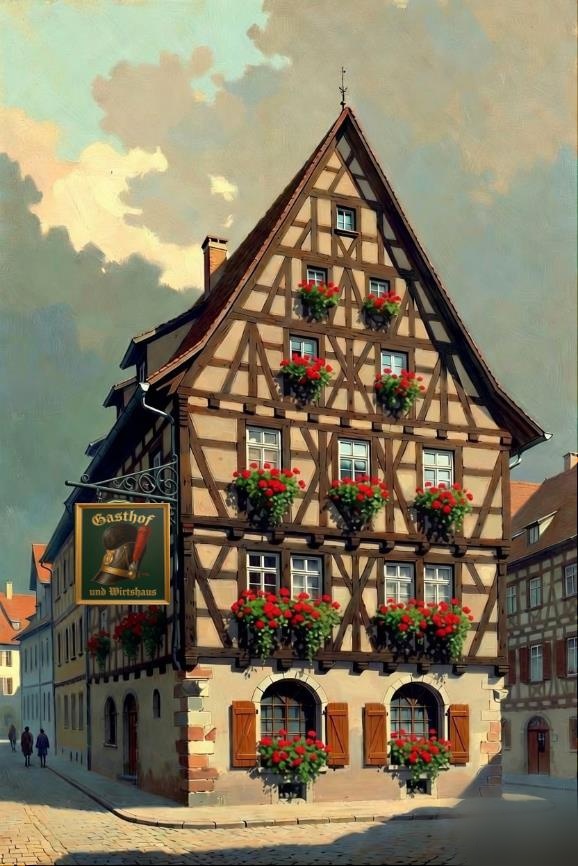
The Raupenhelm
Across the Alte Brücke, at the foot of the Marienberg fortress
Outside
A quiet establishment on a side street, well kept in the way that told a man something about the proprietor before he'd crossed the threshold. The distinctive Bavarian leather helmet with a horsehair crest (the one that looked, if you squinted, like a giant caterpillar) was painted on the shingle above the front door.
Inside
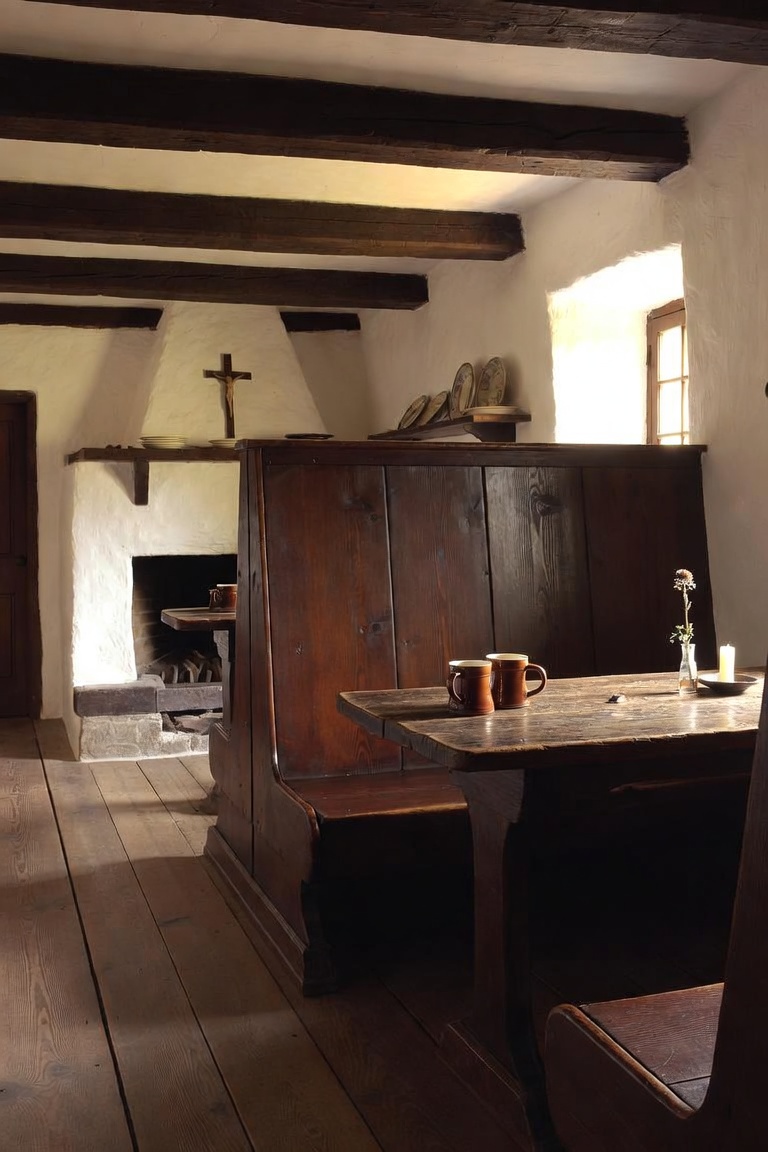
The taproom was dim after the afternoon glare: a high-backed booth near the window, the kind built for a conversation nobody else at the bar needed to hear. Anna brought wine and a loaf of dark sourdough rye without being asked twice.
The kitchen runs to Franconian pork shoulder with dumplings and sauerkraut, sausages poached in wine broth, and a Silvaner from the Stein vineyard poured from the squat, flattened Bocksbeutel bottle that marks it as regional rather than imported.
On winter nights, when the wind gets into the chimney and the fire spits, the taproom keeps a custom of its own. Glasses meet on a single word, Namenlosen. Every man takes a good chug, not necessarily the whole glass, and turns his head to spit, dry and quick, onto the floor. Ask what it means and you will be told it is only what is done. There is a story that goes with it, and it is told elsewhere in the album.
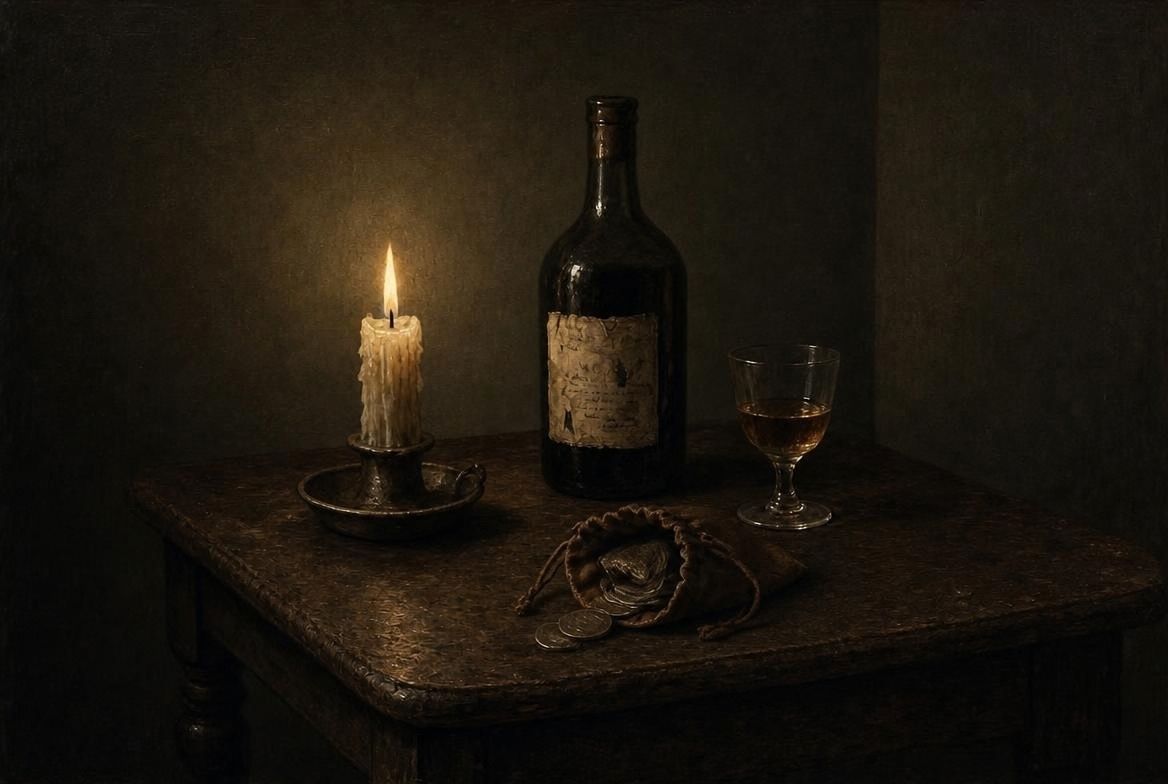
At the Raupenhelm, a gratuity is a little purse of coins left on the table. François Bonvin, 1853. The same table, the same candle, a different custom; see the envelope at Club Marseilles. Both now hang in the gentlemen’s lavatory at Voss Court.
Meet Anna →