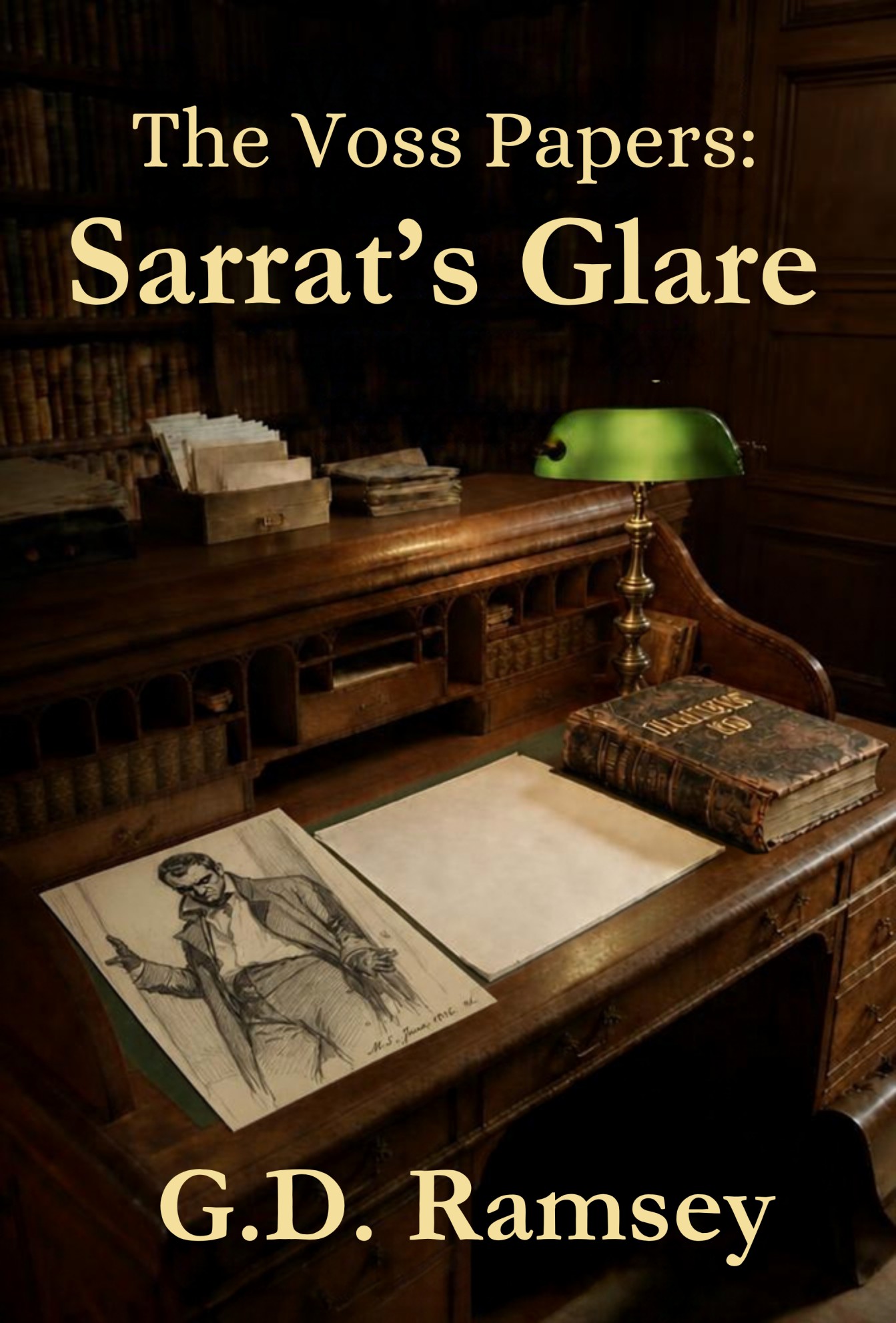
An Excerpt
Prologue: The Chasseur: Taken · Telnitz, 2 December 1805
Sarrat began with nothing, not even a first name. The parish priest in Bayonne wrote it as it was said in Gascony: Sarrat, the same sound as garrote.
The word chasseur means hunter.
Sarrat had been with Davout's III Corps for three weeks when they arrived at Austerlitz on the forced march that everyone said was impossible. The right flank was collapsing when they got there. Sarrat was already ahead of the column.
Sarrat commanded a squadron of two hundred chasseur-à-cheval; hunters on horseback. Two hundred was the number on paper. Campaigning in winter, forced marches, illness, lack of forage, and skirmishing with the enemy had brought the real number this morning to one hundred twenty six. Sarrat reflected that Marshal Davout always forced march. This was not a complaint; he assessed it as being the correct way to fight.
Sarrat's squadron was the lead element of the III Corps. His squadron was Marshal Davout's eyes and ears. Sarrat led from the front.
Sarrat had been operating in it since before four in the morning. He had learned, in the orphanage where dinner time rewarded the observant, that a man who listens more carefully than he looks has a significant advantage over a man who does neither.
He heard the Austrian general before he saw him. The bridle first, the metal note of good cavalry equipment. Then the creak of a saddle that had been well-made and was being ridden by a heavy man. Then, as the fog thinned briefly, the grey shape of a horse better than anything the French cavalry had been issued.
Sarrat assessed the situation in the time it takes to draw breath.
The general was alone, separated from his staff in the fog, which happens. He was armed with a sabre and a pistol, neither yet drawn. He had a rifle scabbard strapped to the saddle on the right side, longer than a carbine scabbard, the kind a man has made for a personal weapon. He had not yet seen Sarrat, who was uphill and slightly behind him and dressed in the grey-green that disappeared into Moravian December.
The calculation was straightforward. Sarrat had always been good at arithmetic.
Sarrat spurred his horse forward to close the distance.
The fight lasted perhaps four seconds. Sarrat had learned at the orphanage that sentiment about the length of a fight was a luxury available only to the living.
He looked at what the dead general left behind.
The grey horse was excellent, long legs, good chest, the kind of animal a wealthy man commissioned not requisitioned. The saddlebags contained things of modest interest. And strapped to the saddle in a leather scabbard, a hunting rifle. Long barrel. Fine work. Rifled. He turned it over in his hands. The barrel was long and the rifling was deep and whoever had made it had understood what it was for. The kind of weapon a general had made for himself in Vienna or Steyr and carried because he could afford to.
Sarrat unslung the scabbard and buckled it to his own saddle. He took the horse as well.
He saw no reason why a dead man should retain such nice things.
The story that follows from here goes to Würzburg, a decade later, where this book and the family's own archive meet.