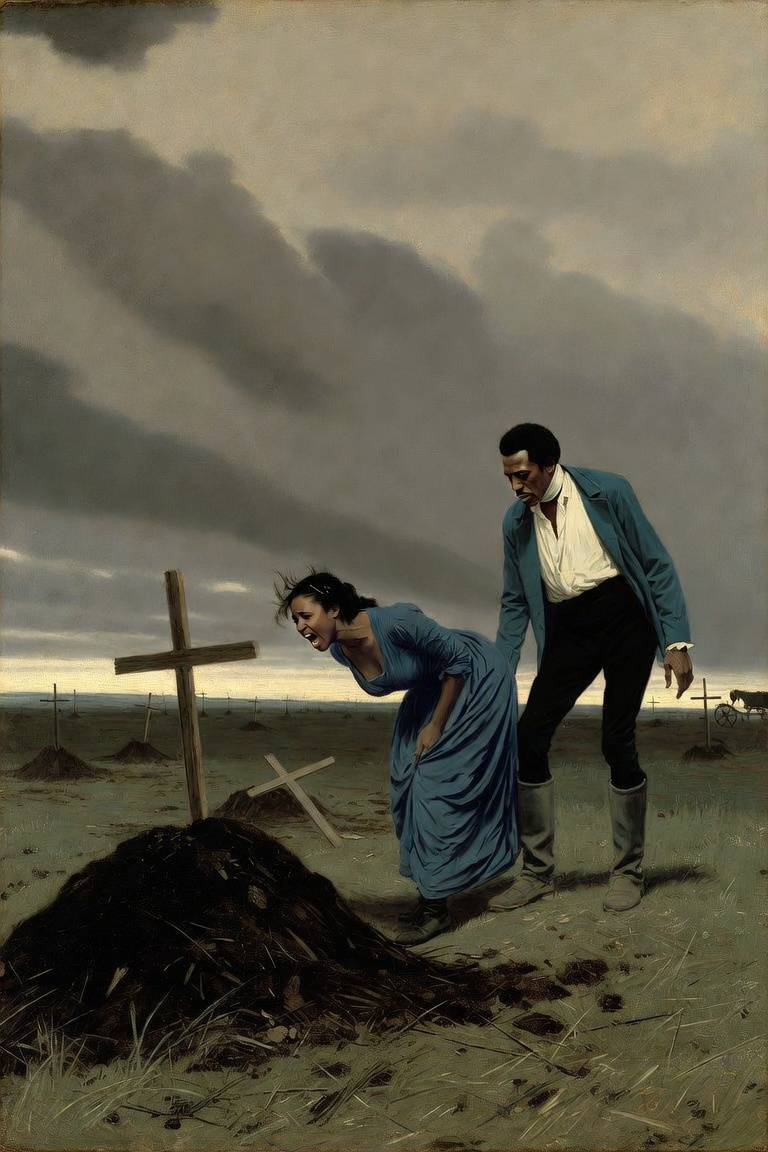
James Tissot, c. 1880s · oil on canvas. Commissioned by the family the better part of a century after the fact, about as far from his usual Mayfair drawing rooms as a subject could get, and yet even here, at a pauper's grave on an overcast day, he can't help making her beautiful. Look at what the light does to that plain dress.
The Graveyard
Élise releases her emotions
No headstone, only a cross built from two lengths of plain wood, and a mound of turned earth that hasn't had time to settle. Whoever is buried here, the family's papers decline to say; only that Élise Tebieux, who by every other account never once lost her composure in forty years of running the most dangerous ledger in New Orleans, is recorded as having lost it here.
Théodore is the one holding her up, the name Théodorville was given for, a detail the family has never once had to explain twice. What brought the two of them to this particular pauper's field, on this particular day, is a question the family's papers leave for someone else to answer.